

Fragments: Depth
Thoughts on Male Survivor Advocacy

What portion of me, exactly, are you interested in?
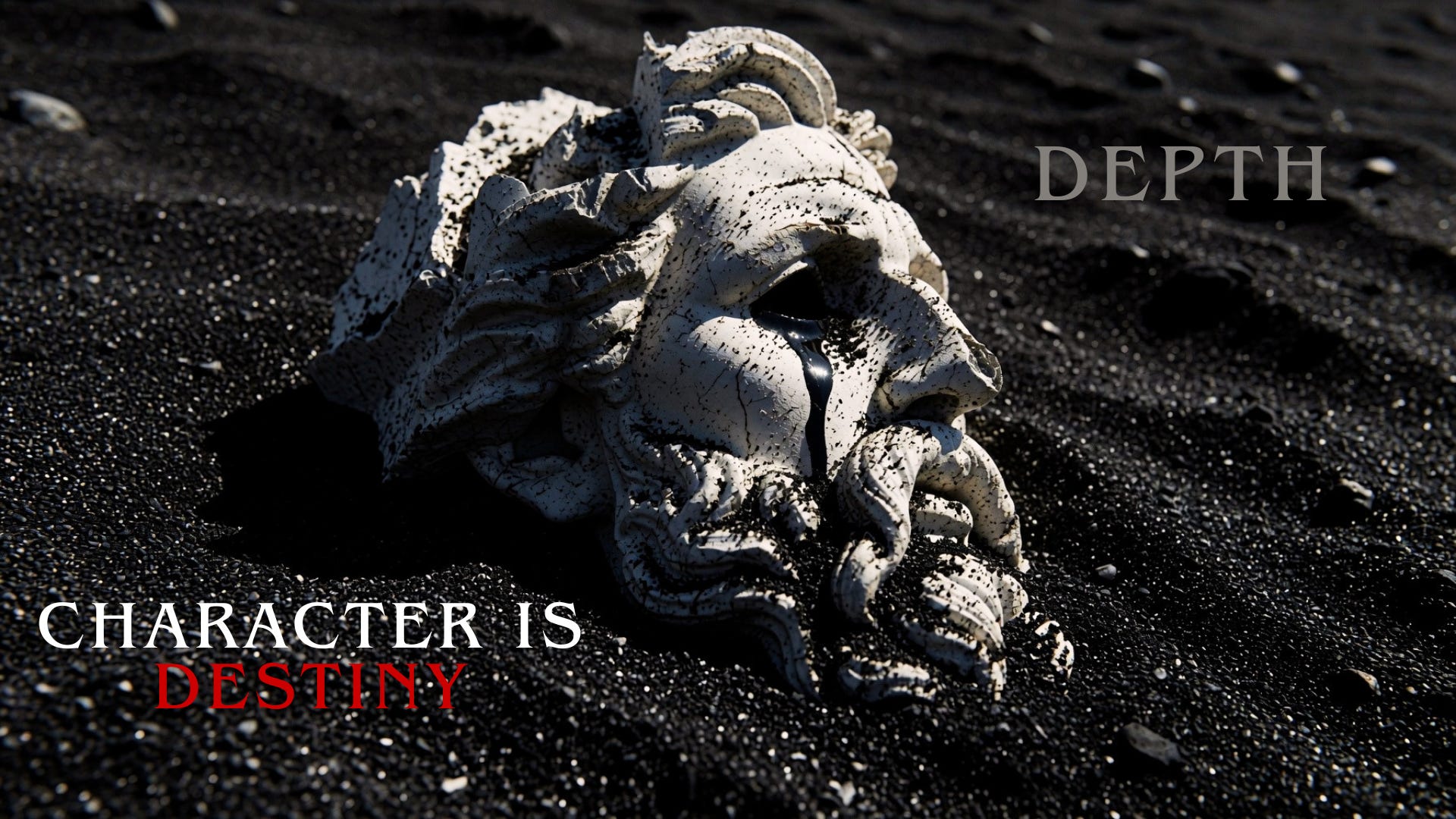
As of late, it seems the interesting portion pertains to the violation I endured as a boy, and how I’ve managed to live with it.
Now, don’t go on misconstruing this short essay as complaining or anything of the like. I am thoroughly aware that my engagement on the topic has been entirely voluntary. Yet, that interest—how I’ve managed to live with it—is one I often encounter. The why often comes later.
Living without it was never really an option—the choice was hardly mine. So, how am I living?
Depressed, at this exact moment. I’m in the slump because it is hot, I am navigating peculiar circumstances, my urge to drink has never been higher, and I have come to resent and crave the camera almost equally.
What?
Did you think I was somehow immune to the inescapable pull of vanity?
Or, more foolishly, did you think I am happy or speaking in a motivational tone all the time?
Have you truly come to read these pages in search of the secret to overcoming something terrible—and in your pursuit of answers, did you confuse one thing for another?
Moving on as pleasure; healing as happiness; overcoming as comfort; forgiveness as absolution; distance as space; love as peace?
Coming to terms with what happened as immunity to bouts of depression?
Why is it, in the experience by which I have continued to ground this philosophy I write of, that most people who approach me seek to know an experience they themselves cannot possibly know unless they have similarly lived it?
Why is there such a narrow emphasis on the topical label of survivor?
How much of this story—and by extension, me—are you willing to know?
I’ve told you how I feel—human. Depressed that my bed is empty and my prospects feel limited. I lack sleep. I currently live in an odd world in which dreams are co-occurring with nightmares, and some days the uncertainty is crippling.
All the same, perhaps tomorrow I will rise with a sense of purpose and contentment—and the next day, something more; or something else entirely. Perhaps the usual dose of happiness I receive in that daily after-gym-bliss will last longer next time.
Would it trouble you to know that I am also sore, busy, tired, and hungry?
Are those answers satisfying, or must I once again retrieve the stoic mask and begin sloganeering as the others do? No, if it is the usual two-pump motivation you are after, then off you go.
What I want is someone—anyone—who seeks to understand that this philosophy is inseparable from the other topic that might have brought you here.
Is a man’s personal philosophy not innately tied to the very nature of his perseverance?
What would you say to other male survivors who watch this interview and are in need of healing, Nick? How have you managed to overcome? What tools should they use?
Well, how much time do you have?
“How do I overcome low self-worth?”
Simple: see yourself as worthy.
How do you get there?
Tell yourself, I’m worthy.
Daily.
Weekly.
Monthly.
Eventually, you’ll come to wonder how you ever managed to run a line of questioning as preposterous as that.
And then, maybe, you’ll philosophize about the very practice of seeking someone external for an internal problem. Yes, other people may have participated in teaching you that you are worthless. However, they could not possibly perform the final act of convincing you otherwise.
“How can other men overcome CSA?”
Well, your guess is as good as mine—there are plenty of roads there, and it depends on the man. I suppose if they overcome it in a healthy manner that does not hurt anyone else or involve self-harm, then they’re doing a fine enough job.
This also relies on your preconceived notion that it can be overcome in any way that represents completeness, or that otherwise eradicates the accompanying mental health struggles.
Look, I can only speak to how I am overcoming it, and that my chosen path for that particular venture was, is, and will be philosophy. I suppose I could slather on and on about how being forced into such a visceral liminal box as a boy produced an uncanny inquisitiveness for all things meaning, literature, purpose, character, and mortality.
I didn’t find any one tool—I built an orientation toward existence.
What else would you call your mind once it has become entangled with such a profoundly dark circumstance? And, at age five, no less.
Perhaps you would consider that concerning myself with questions—the caliber of which only ever seem to produce others—became comforting against a similarly unending anguish. While that did not allow me to escape the box, it did allow for an exploration of sorts. And, wandering, I began occupying myself with philosophy.
Eventually, if we’re still on the topic of how I live, it is because I decided that character is the only thing I could make real in a world that might as well be labeled as fictitious at best. Beyond, perhaps I could prescribe inquisitiveness toward all that ails, aids, and puzzles the other survivor as at least one threshold in the journey of healing.
What else can you really control but character?
What could I have possibly hoped to control at such a young age, later, and now?
The abuse?
The past?
The future?
Others?
Or worse—groups of others?
Yikes.
Sure, let’s place that journey under more agreeable terms. God forbid any portion of myself land outside the appreciated version of we who bear the label.
I developed adequate self-worth. I went to therapy, got sober, picked up some useful hobbies, and developed good coping skills. I forgave the past, myself, and others—and took accountability for my actions. I rediscovered my relationship with my God, my family, and accrued some excellent friends.
Should I go on, or is that suitable enough for your topical appetite?
What keeps me going isn’t the simple expectation that I look out for my mental, physical, and spiritual health—it is the unending list of questions.
What does it mean to suffer?
Is suffering virtuous?
If so, why?
If not, why not?
What can be gained by seeing such suffering as a gift?
What can be lost by seeing it only as terrible and wholly unjustified?
Tell me: wouldn’t you like to fully understand what broke, what that breaking did to you or others, and what remains within your power now? Follow that track, gather some inquisitiveness, and see where those roads take you.
The boy couldn’t control what happened, and so the adult became obsessed with understanding mechanisms because being blindsided once was plenty enough. I can, under no circumstances, allow that sort of unexamined destruction again.
Careful with your assumptions now—I’ve spent enough time pondering each of those to know they are book-worthy in their own right. One can spend years pondering them. And why not?
Do you not occupy the same general canvas as I?
What else would you call twenty years of living in that liminal box, if not a place where thought is constant, wandering, or exacting?
Meh, that wall over there is boring, I wonder if I can expand it?
My, my, that demon in the corner sure looks terrifying—and just look at the damage it has done to the boy still in its grip. How can I create distance from it?
Well, here comes an influx of all these strange new emotions and states of being. I suppose renovations are in order.
You either make peace with your enemy, or you become consumed by him.
At this point, I suspect you’re wondering the exact thing as I:
Why are you here?
Truly, why have you decided to read this? What is it you hope to gain?
Is it the topical label of survivor you wish to explore, with the usual riff-raff of self-help slogans, quotes, and motivational images so readily available on the gram?
Have you landed here because you thought I might offer you scraps and slogans to feed a desire to rid yourself of inadequacy, depression, trauma, years and years of silence, loneliness—when what is truly required is the full-course meal?
What is your real interest?
What is the scope of your perspective?
At what depth would you like to meet me?
How much time have you got?
006.1 — Revisiting ‘“Misfortunes or Gifts?”: On the Practice of Perspective

The daily practice of perspective matters more than any perfect end-state.